
Buckle Up - Car Seat Basics & Ergonomics for Parents
Making it out of the house with your newborn or infant can be quite intimidating for new parents, especially when you add in the dreaded car seat. Car seats can be heavy, confusing, and uncomfortable for all parties involved. However, our goal is to help you understand height and weight limits for infant car seats, infant positioning, and car seat lifting strategies for adults to take the weight off of your shoulders when it comes to transporting your little one in a car seat.
Car Seat Basics
In addition to age specifications, car seats come with height and weight limits designed for maximum safety for that specific carrier (NHTSA, n.d.). Infant car seat weight limits tend to vary from a maximum of 30-35 lbs and a maximum height of 28-35 in (Schroeder, 2024). Choosing a car seat that favors your baby’s measurements (i.e., choosing a car seat with a 35in height limit for longer babies) allows for better positioning, comfort, and protection. In addition, infants should be placed in rear-facing car seats and remain in them so long as they do not exceed the height and weight limits of their specific car seat (NHTSA, n.d.). Children should then remain rear-facing until they are over 40 in and 40 lbs, which can occur in children as old as 4 years old (Illinois Office of the Secretary of State, n.d.).
Infant Positioning
One easy step to ensure the safest car seat experience that favors milestone development is choosing a carrier that favors their car seat experience. For example, infants under six months should be placed in car seat carriers that favor a C-shaped spine with wide hip positioning and support under the knee support for as little time as possible (IHDI, 2026). In addition, your infant’s head should be in a neutral position with space between the chin and the chest to ensure the best breathing biomechanics possible (Chicco, 2026). As baby gets older, it will be important to ensure that they are still under the height and weight maximums for their specific car seat or investing in a convertible rear-facing car seat (NHTSA, n.d.). In the 6 to 12 month range, try placing the carrier behind both the passenger and driver side seat to encourage head rotation to either side to avoid developing a side preference.
Parental Biomechanics- Lifting & Carrying
Lifting a 15-week-old newborn in their car seat can add an average of 4kg (8.8 lbs) to the weight you have to carry, so proper biomechanics is crucial to prevent low back pain, pelvic floor dysfunction, and injury (Havens & Siddicky, 2025).
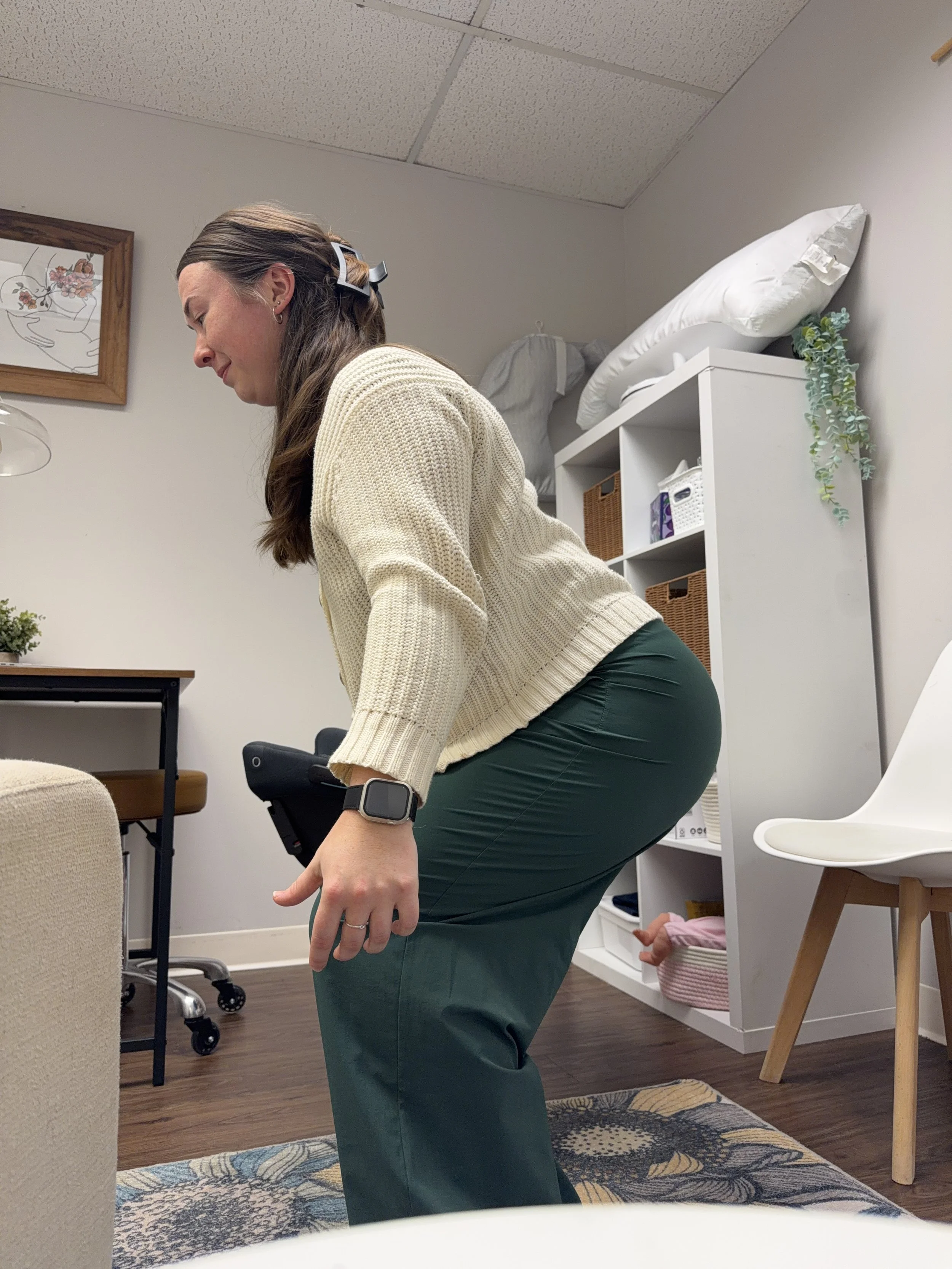
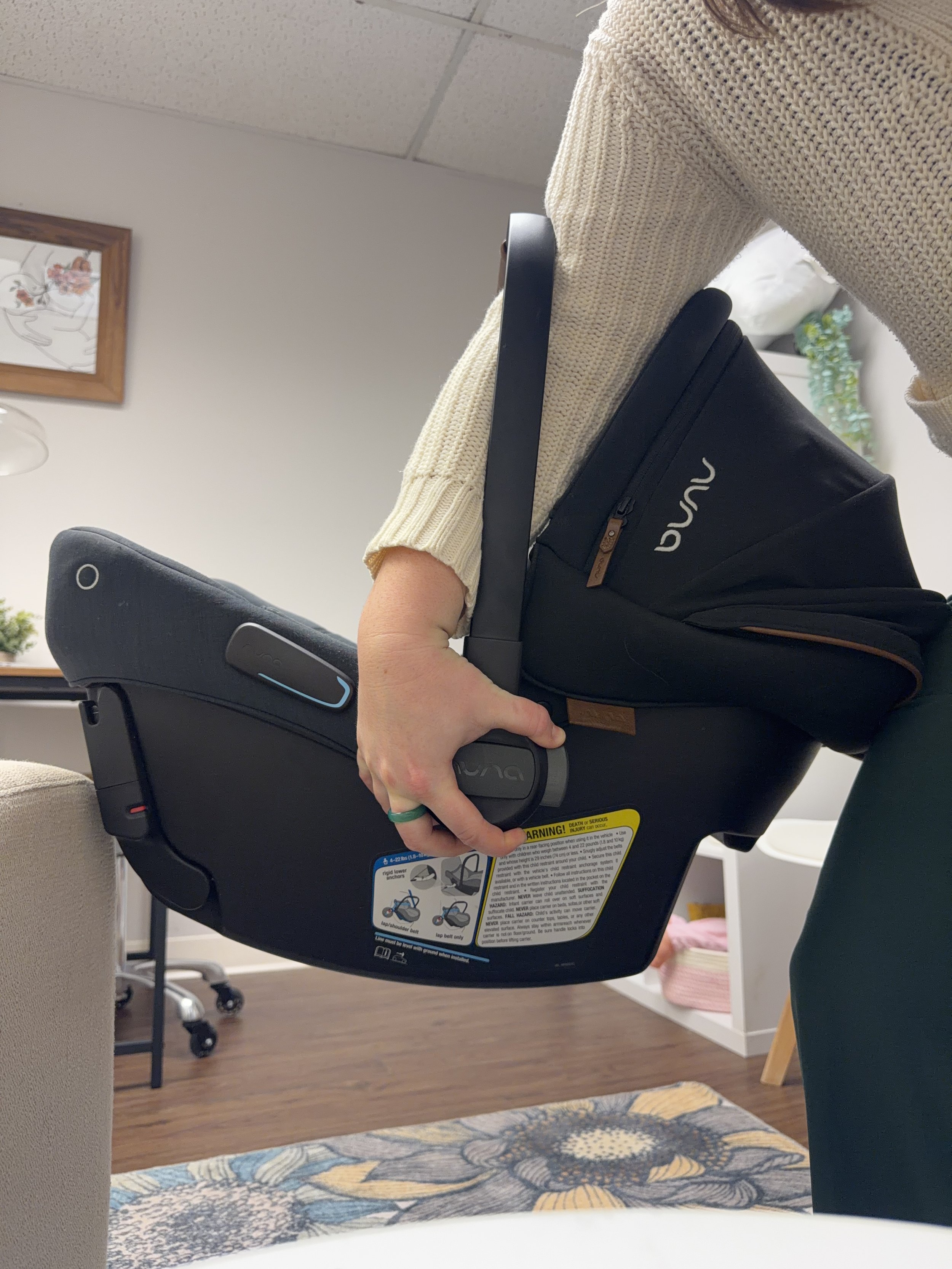
To properly pick up a car seat:
Get into a squat position on one side of the car seat, sending your hips back behind you.
This is preferred to a “crunch” position, which can place increased stress on your low back.
Lace your carrying arm under the bar of the carrier, and then place your hand near the bottom of the handle.
To stand back up, press the ground away with your feet and squeeze your glute muscles while maintaining a neutral spine.
The car seat should end up resting at hip level while being carried.
If you feel uncomfortable with a squat, you can also utilize a single-leg lunge next to your baby’s carrier with the leg closest to the carrier behind you.



Limiting Car Seat Time
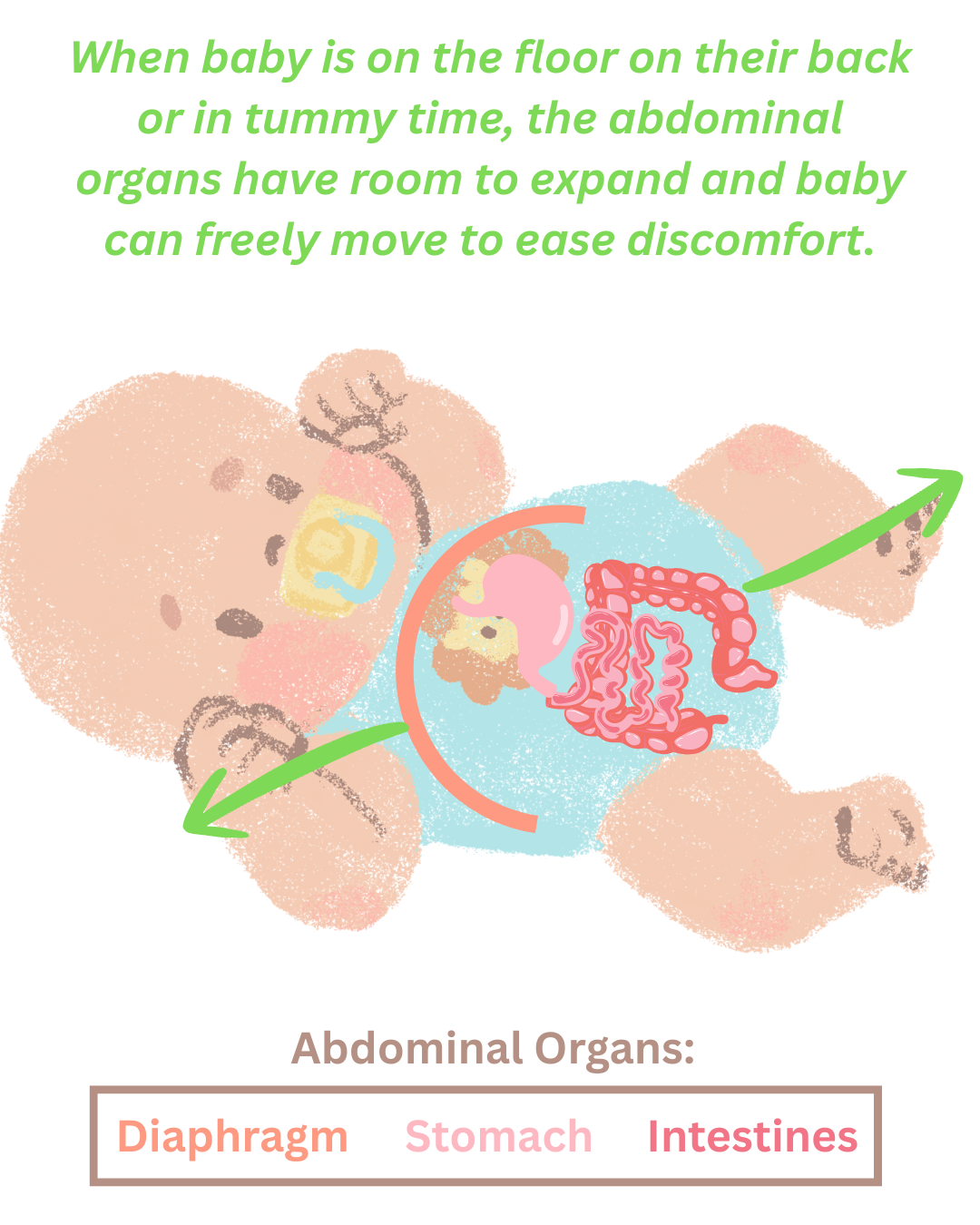
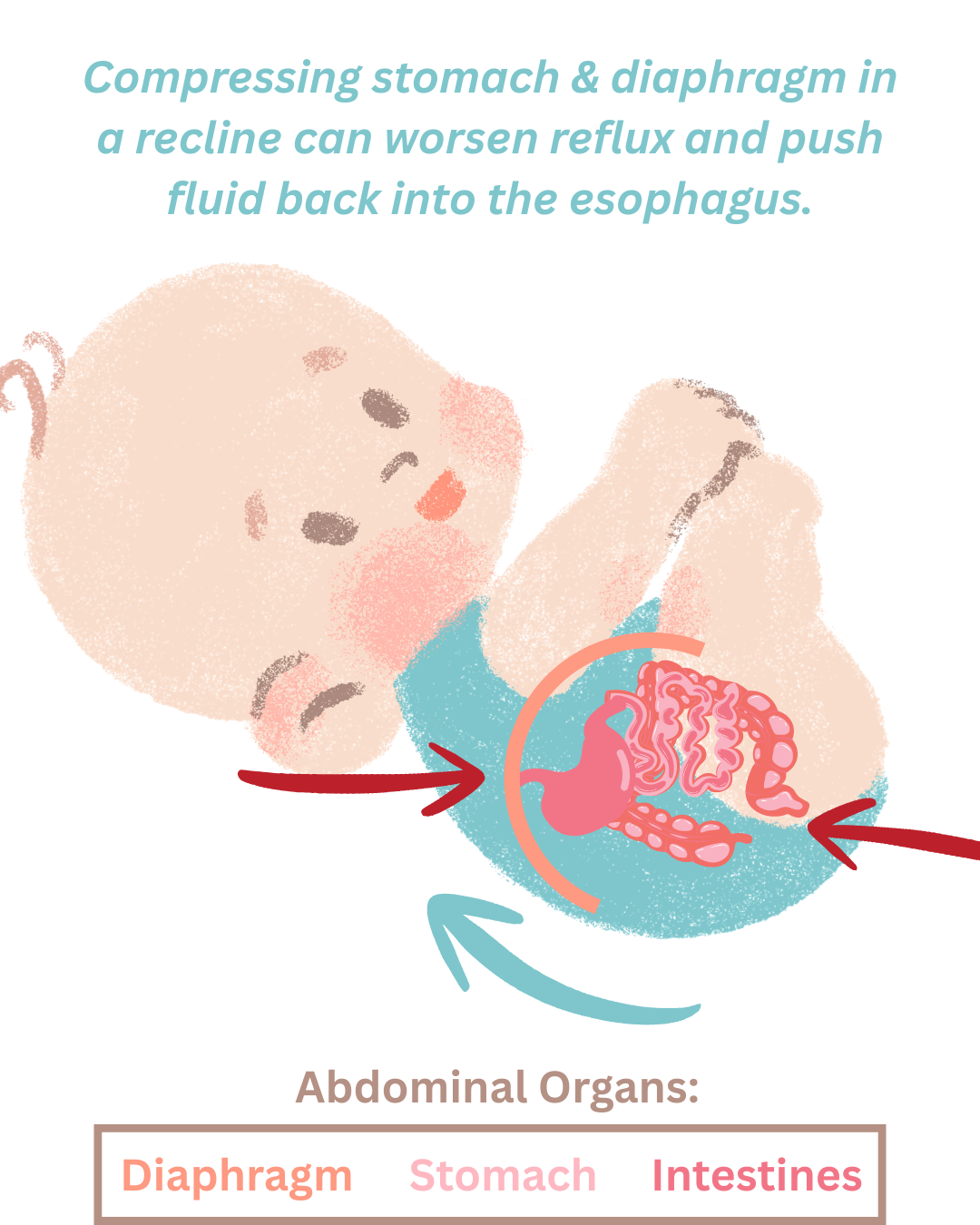
Similar to how adults dislike traveling by car or airplane seat for long periods of time, infants also should spend a limited amount of time in their car seat. Infants who spent long periods of time in a car seat had less muscle activation in their thighs and legs, which could impact their later development (Siddicky et al., 2021). Think of it like an adult traveling in a car or airplane seat—the seat itself serves a purpose in transporting you from point A to point B, but you wouldn’t want to spend longer than you have to be stuck in the seat itself. In addition, some infants may not prefer to be in their car seat because the position is making other conditions worse. Reclined positions can increase abdominal pressure and squish digestive organs together, which can then aggravate any existing reflux, colic, and overall digestive discomfort (see Figure 1).
Whether you’re making a quick trip to the store or traveling the world with your family, implementing these simple changes can change your bumpy ride into a smooth cruise.
References
Chicco. (2026). The Optimal Newborn Car Seat Position for Your Baby’s Safety. ChiccoUSA. https://www.chiccousa.com/baby-talk/newborn-car-seat-position/?srsltid=AfmBOopLiK_XlLPQ9LOEOFbXhFYwLQJc3A5wez81iEoIwqUcYu5x1BRf
Havens, K. L. & Siddicky, S. F. (2025). Characterizing kinematics, kinetics, and muscle activity of postpartum mothers lifting their own infants during three everyday tasks. Journal of biomechanics, 189, 112797. https://doi.org/10.1016/j.jbiomech.2025.112797.
Illinois Office of the Secretary of State. (n.d.). Child Passenger Safety Requirements. https://www.ilsos.gov/departments/drivers/childsafety.html#:~:text=Ages%202%20to%204,seat%20with%20a%20harness%20system.
International Hip Dysplasia Institute (IHDI). (2026). Baby Carriers & Other Equipment. https://hipdysplasia.org/baby-carriers-other-equipment/
National Highway Traffic Safety Administration (NHTSA). (n.d.). Car Seat Recommendations for Children. U.S. Department of Transportation. https://www.nhtsa.gov/sites/nhtsa.gov/files/documents/carseat-recommendations-for-children-by-age-size.pdf